Cheap blimps are made of PVC. Good blimps are made of polyurethane. They look the same in a photo and behave completely differently on a tether. This is the part of buying a marketing blimp nobody explains until it is too late.
Polyurethane vs PVC, side by side
| What matters | Polyurethane (these blimps) | PVC (import blimps) |
|---|---|---|
| Helium retention | Loses about 1% a day. Top off weekly. | Loses 5 to 10% a day. Top off daily or it sags. |
| Cold weather | Stays flexible below freezing. | Stiffens, cracks at seams. |
| Sun | UV stable. Colors stay bright. | Yellows and gets brittle in a season. |
| Weight | Lighter, so more net lift. | Heavier film, less lift, bigger helium bill. |
| Repairs | Patch kit, back in the air. | Seams fail, film tears. |
| Service life | Years. Some owners are past 14. | One season is typical. |
Built in Glendale, Arizona since 1979
The blimps and balloons on this site are made by Arizona Balloon Company, a family factory that has been building polyurethane advertising balloons for 47 years. Some of their clients have been flying with them for more than 30 years. That does not happen with a product that wears out.
- Polyurethane film, heat-sealed seams
- Inflatable or fiberglass fins on blimps
- Lettering applied at the factory, proofed before it ships
- $1,000,000 liability insurance. One claim, $2,000, in 40 years
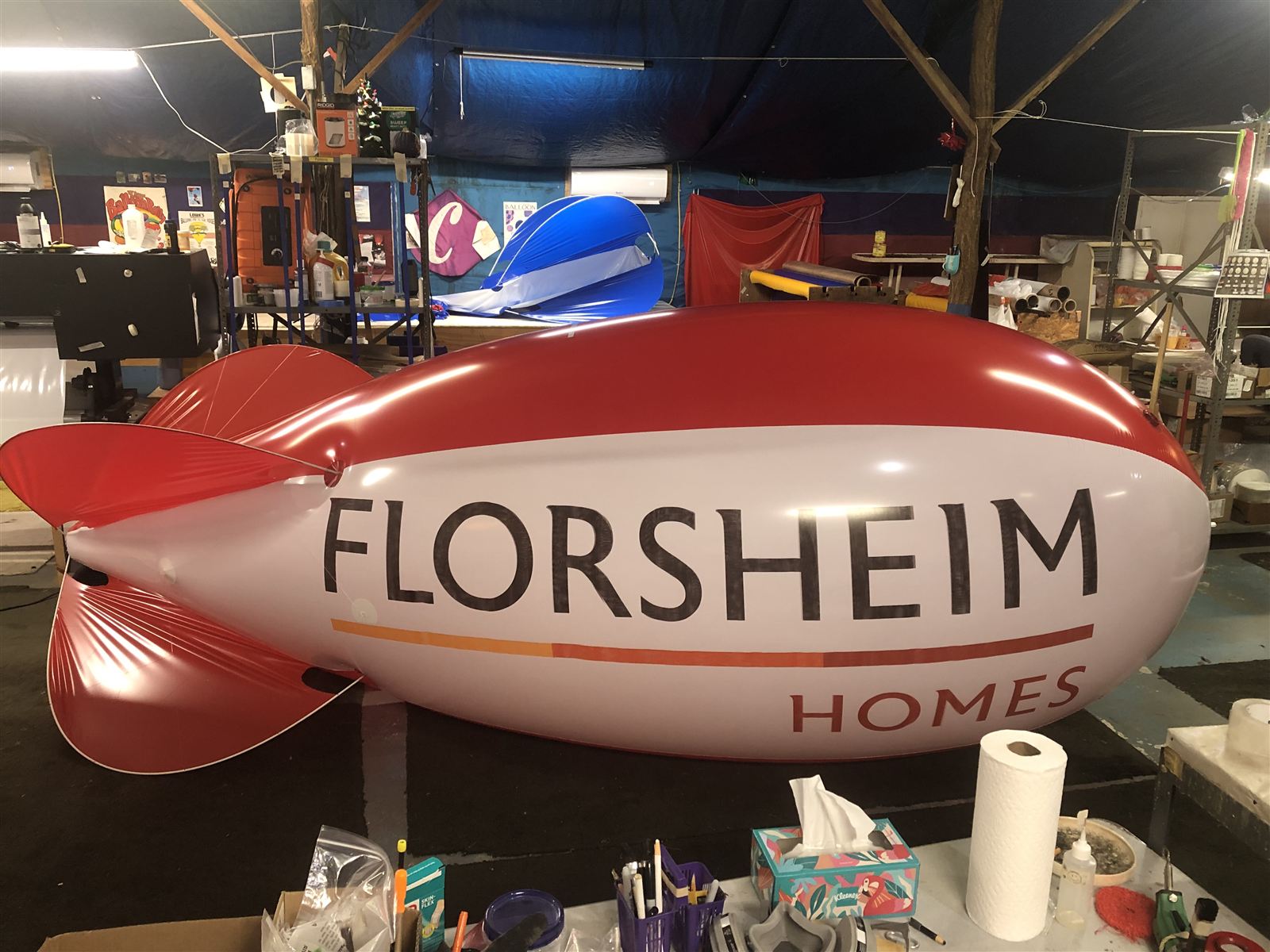
What “wear only” warranty means
If the blimp wears out, send it back for a replacement. Weather is not wear. A blimp left up in a 40 mph gust is a loss, not a defect, and the factory will tell you that up front. Read the wind rule, follow it, and the blimp will outlast the campaign.
Care that keeps it flying for years
- Deflate slowly and fold flat. Store in the shipping box, out of the sun.
- Top off, do not over-fill. Polyurethane loses about 1% a day. Firm, not drum-tight.
- Bring it in for wind over 25 mph. Ten minutes of work saves the whole blimp.
- Patch small holes right away. A pinhole today is a seam tomorrow.